
Tuesday, 30 March 2010

What are Diptychs?

Elizabeth Halford: Elizabeth Halford uses Diptychs to story tell as well as to do with time. Such as the washing up and the Baby being washed shows either Day and Night or Dirty and Clean.


http://digital-photography-school.com/diptychs-triptychs-5-prime-examples


John Bernhard: John Bernhard has used Diptychs in a different way by matching two completely different subjects together but making them work as they are the same shape or bare a resemblance.


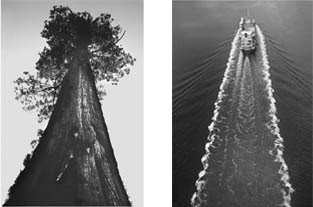

When i went to my tutorial we had a discussion to as how I should present my portfolio piece. My tutor suggested to me about using the formation of a Diptych. I had no idea what this was so I went back and did a bit of research around this type of format.

http://www.johnbernhard.com/Diptych/Pic01.html

Friday, 26 March 2010

Blists Hill Visit 2

Today I went to the Victorian Museum again to get another range of photographs which I did not manage to get last time.
Here are some examples of some that I took:


I am not sure how they are going to work as portfolio piece yet. I need to how a look to see how other portfolio pieces are put together and also techniques. I am also due a tutorial too so hopefully my tutors will point me in the right direction.

Friday, 19 March 2010

Robert Mapplethorpe

I have been looking at some of Robert Mapplethorpe's photography as he is quite well known for taking photographs of flowers. I looked at his work to see what type of compositions he used when photographing and also whether he used different colours, black and white, bunches of flowers, on single flower etc to try and get some inspiration.


http://www.mapplethorpe.org/portfolios/flowers/

I got a lot of inspiration from looking at his work. I especially liked looking at the different compositions he used as some of them are quite unusual and some are very elegant. It gives me the perception of innocence which I may try to carry with my photography

Tuesday, 16 February 2010

Blists Hill

I went on my first visit to Blists Hill Victorian Village today. Here are some photographs which I took:


I took 614 in all as the more photographs to choose from the better. I am most likely going to need to make another visit to the museum to get more of a range.

Friday, 12 February 2010

Rotten Fruit

I decided to do a tester shoot for my rotting fruit project. I just did a basic composition to see how quickly it would rot and how the colours worked together etc.


As you can see, the photographs did not turn out very well at all. I did not like the composition, lighting, the position of the fruit, or anything about the pictures really. But it was good as a starting point and a tester but i do not think I want to do rotting fruit anymore so I am going to go away and have a think about what else I can do. I have always liked the idea of having a flower blooming then dying at the end which I could have a go with.

Monday, 8 February 2010

Victorians

Through research I have found out that Victorians actually standarised time as it was in this era in Britain that the first use of steam trains came into play. The whole country was out of sync with each other with time so they needed to make sure that they synced everything together with timetables to make sure the service worked.

"When people began traveling by train, sometimes hundreds of miles in a day, the calculation of time became a serious problem. Operators of the new railroad lines realized that a new time plan was needed in order to offer a uniform train schedule for departures and arrivals.
Since every city was using a different time standard, there were over 300 local sun times to choose from. The railroad managers tried to address the problem by establishing 100 railroad time zones, but this was only a partial solution to the problem."


However it took a while for the service to actually work due to all of the time zones needing to change with caused a lot of confusion for the public.

"The fact remained that the different railroad lines were using time schedules that varied from each other and from the cities they passed through, causing considerable befuddlement. Where railroad lines using different time zones intersected with each other, or with cities using different time standards, travelers were especially confused.
During the mid-nineteenth century, people throughout the world had experimented with methods of standardizing their clocks. In 1830 the U.S. Naval Observatory was created to cooperate with Great Britain's Greenwich Observatory to determine time based on astronomical observations. Accurate sea navigation based on the calculation of latitude and longitude, depended on accurate timekeeping."


Website: http://memory.loc.gov/ammem/today/nov18.html


4th project still not finalised!

I am still debating what to do for my fourth project, It is proving to be quite difficult to find something thats different. I have had one more potential idea which i think could fit quite nicely into my theme which is a period of time. In Ironbridge there is an old Victorian museum which is still being run as an old Victorian street with people dressed in that time periods clothing too. I thought that this could be quite interesting with maybe doing portraits and just generally documenting a day within this village.

They have old sweet shops, doctors, houses etc so i could cover a lot of different aspects of that time period. I will also think it will give me a different type of dimension to my project so that its not so monotonous.


Website: http://www.ironbridge.org.uk/our_attractions/blists_hill_victorian_town/